February 27, 2026
Develop a centralized fleet maintenance program to regularize inspections, record every service action, and enable data-driven decision making. Utilize fleet maintenance software to automate daily tasks and have one source of truth for your assets.
Fix things before they break and breaking it is expensive. Set maintenance reminders, track telematics, and use dashboard diagnostics to take early action.
Boost compliance and safety with precise records, scheduled inspections, and audit-ready reports. Combine driver reports, AI dash cams, and incident tracking to reduce risk and keep up with regulations.
Drive uptime and control costs with real-time monitoring, trends, and smart scheduling. Monitor work orders, parts inventory, and actual costs to pinpoint savings and prevent redundant repairs.
Use real-time data, automated alerts and historical analysis to enhance planning and performance. Leverage predictive analytics and AI-driven insights to anticipate needs, prioritize tasks, and budget more efficiently.
Select scalable, intuitive solutions that work with telematics, inventory, and reporting tools. With powerful vendor support, you need mobile access and customizable workflows to fit your operational evolution.
Fleet maintenance tracking involves logging, tracking, and scheduling service tasks for vehicles and equipment throughout a company. It includes service schedules, work orders, parts consumption, labor hours, and cost to help keep assets secure and operational. To reduce downtime, crews record fault codes, fuel consumption, tire wear, and service dates all centralized. Most employ telematics, odometer reads, and GPS to time oil changes and inspections by distance or engine hours. It reports cost per kilometer, mean time between failures, and overdue work, which helps with budgeting and auditing. For more command, logs additionally track service provider work and guarantee assets. The following sections describe important functionality, typical configurations, and how to initiate or optimize a maintenance plan.
Smart core fleet maintenance tracking helps keep vehicles in sound shape and reduces unexpected breakdowns. With real-time data and transparent visibility at its core, it enables you to schedule work, eschew last-minute scrambling, and maintain team coordination across locations.
Mileage, engine hour, and time-based standard service schedules
Centralized records: work orders, parts, costs, DVIRs, warranties
Automated alerts and reminders for inspections and service
Telematics data includes fault codes, fuel use, location, idling, and harsh events.
Parts and tire tracking with reorder points and vendor information.
Role-based access, audit trails, and compliance reporting
Dashboards for uptime, cost per kilometer, and service backlog
Cutting edge software-based solutions make it easy to automate inspections, log every job, and monitor asset health. It taps odometer and hour‑meter data, interprets fault codes, and integrates GPS for context. Real-time updates make service timing reflect actual use, not guesswork. Central data provides managers with a single source of truth for schedules and deployments.
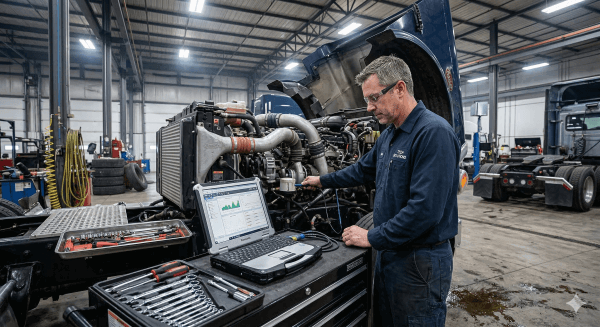
Keep small problems from becoming big bills by setting preventive tasks by mileage, engine hours, or dates. Automated preventive maintenance uses live usage to establish intervals more precisely than fixed calendars.
Leverage alerts to highlight oil service at 15,000 km, brake inspections at 500 engine hours, or emission faults as they occur. Just a few reminders increase on-time completion rates.
Telematics and dashboard diagnostics show early signs of rising coolant temperature, diagnostic trouble codes, and weak battery volts. Capturing these quick hits lengthens asset life and stabilizes reliability fleet-wide.
Maintain neat inspection, repair, and DVIR logs to comply with regulations. Keep forms, torque specs, and service proof in one system linked to each unit. Automate compliance checks and audit exports to reduce the risk of penalties. Fleet Maintenance Tracker About the Core of Fleet Maintenance Tracking Track inspection cadence and completion rates to demonstrate oversight.
Do daily walk-arounds and weekly checks that crews can do quickly. Identify and coach drivers for speeding, phone use, or tailgating using AI dash cams and safety tools. Record incidents, emergency repairs, and evidence of repair so risk remains minimal. Embed safety steps into each job card and PM task.
Follow PM plans and react to faults to reduce downtime. Real-time tracking can reroute a unit to a nearby shop and keep loads motoring. Study failure trends to eliminate root causes and keep vehicles road-ready.
Monitor labor, parts, and fuel. Fuel can approach 60% of the budget. Monitor work orders, parts consumption, and actual job costs. Auto reports highlight expenditure spikes and potential savings. Time service to leverage scheduled stops and eliminate waste.
Digital fleet maintenance systems take your team beyond paper and random folders. One platform can keep all service records in a single searchable database, connect to parts utilization and labor, and eliminate mistakes associated with manual spreadsheets. Cloud tools layer role-based access, version control, and audit trails on top of basic logs, while advanced reporting transforms raw logs into downtime trends, cost per vehicle, failure frequency, and maintenance compliance rates. Lots of fleets experience year-one efficiency increases in the 20% range, as emergency catch-up work gives way to scheduled maintenance and predictive inspections.
GPS and telematics feed location, engine hours, coolant temperature, fault codes and driver behavior straight into the maintenance app. Live dashboards display fuel burn, tire pressure, and service countdowns for all assets — not only trucks but vans, trailers, and off-road equipment.
Immediate alerts for severe idle, heavy engine load, or over-threshold mileage require rapid response. A unit standby for 90 minutes receives a push notification. A trailer with low hub temperature difference typically indicates a bearing problem.
Feeds integrate with work orders and inventory. A DTC fires a draft job, holds a filter and fits a tech. Digital logs bring problems to light immediately, not days later, so crews arrange fixes for downtime and sidestep troubled routes and stressed customer relationships.
Create reminders for oil change intervals, safety inspections, emissions tests, and tyre rotation by date, km, or engine hours. Route notices to the right role: driver, dispatcher, and shop lead.
Go beyond simple presence logs.
Tune thresholds to your duty cycles and climate. A mine site can reduce hydraulic service windows. A city fleet may concentrate on brake wear.
Early warnings on engine faults, low brake pad stock or compliance deadlines stop units going down. Moving beyond simple logs, automating daily check reminders and routine services reduces admin time and eliminates noise.
Look at repair history to identify recurring trouble by make, model, or route. Patterns feed training, vendor selection, and better specs.
Run reports on historical costs, downtime and turnaround to help inform budgets and replacement timing. Predictive maintenance can increase uptime by as much as 25% and save roughly $2,000 per vehicle annually, while prolonging asset life.
|
Metric |
2023 |
2024 |
Trend |
|---|---|---|---|
|
Avg downtime per asset (hours/month) |
11.2 |
||
|
8.6 |
Down |
| Cost per vehicle (USD/month) | 540 | 468 | Down | Failure frequency (events/100k km) | 3.1 | 2.2 | Down
| Compliance (%) | 88 | 96 | Up |
Manual sheets work for small fleets. Scale introduces risk and latency. Advanced logs take teams from reactive remediations to scheduled work in demand windows with transparent total cost of ownership.
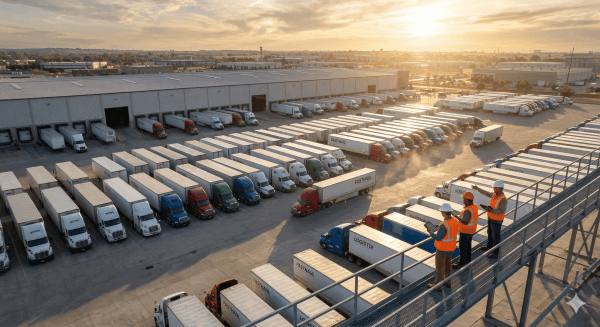
Fleet efficiency is always work, not a one-off victory. It’s not just about cheaper fuel or quicker routes, but rather sustained, high production out of assets, individuals, and expense. With average truck operating costs close to USD 180,000 a year and fuel making up around 39% of that, rigorous maintenance tracking is a fundamental lever.
Map current maintenance flow and list all touchpoints.
Establish baseline PM and PdM intervals by vehicle type and vocation.
Digitize work orders, parts, and service history in a single system.
Auto-schedule by engine hours, odometer, and time windows.
Stage parts using reorder points and supplier lead times.
Track KPIs: PM/PdM done vs. Scheduled, repeat faults, NPT.
Unlock fleet efficiency: Utilize reports to identify bottlenecks, manage staffing levels, and optimize delivery windows.
Feed safety data to reduce inspections and gain bypasses.
Review outcomes monthly, then reset thresholds and targets.
Set tire pressure checks, wheel alignment, and air filter swaps on fixed kilometers and hours.
Flag idling in excess of 5 minutes, coach hard braking, harsh starts, and speeding.
Route with real-time GPS to reduce detours, congestion, and deadhead kilometers.
Cross-check fuel receipts with telematics to identify theft or card abuse.
Leverage driver scorecards and easy rewards associated with liters per 100 kilometers.
Calibrate fuel sensors and monitor payload to stabilize fuel consumption.
Unlocking Fleet Efficiency A preventive plan keeps engines in good trim. Clean injectors, fresh oil, and software updates all help burn less fuel and lower soot load.
Telematics reveals where idling and route drift waste fuel. GPS-based fleet tracking puts you in control, simplifies operations, and boosts margins.
Punctuate extended life with routine maintenance and quick repairs that keep minor defects from becoming major.
Monitor coolant temperatures, oil health, DPF regens, brake wear, and vibration. Establish thresholds for downtime planning, shifting units, or retiring them. Record each service and component. Complete logs support warranty claims, increase resale, and reduce conflicts.
Predictive models determine end-of-life by usage, faults, and cost per kilometer, so you can phase buys and avoid rush orders.
Dispatch jobs by skill tags, certifications and available bays. Leverage software to line up work orders, establish SLAs, and monitor on-time rates. Level the board to quell overtime and keep PM days on schedule. Track labor hours, first-time fix and wrench time to tune staffing and training.
Robust fleet maintenance tracking requires pristine connections between software that powers your work. The aim is a single source of truth that reduces lag, mistakes, and blind spots.
Integrate your maintenance platform with finance, HR, procurement, and compliance tools so work orders, parts costs, and labor hours transfer without manual entry. This eliminates duplicate data and accelerates job close-out. A typical obstacle is disparate systems that silo data. Use APIs or iPaaS connectors to sync key fields: asset IDs, odometer or engine hours, warranty dates, invoice numbers, and vendor records. Set bidirectional sync where needed, such as pushing completed work orders to accounting while pulling approved vendor pricing back into parts catalogs. Centralize data on unified dashboards that operations, finance, and leadership can view, with role-based access to keep control.
Feed telematics into maintenance to inject live odometer, fault codes, and fuel usage into service schedules. Combine this with stocking tools so component inventory, reorder points, and vendor lead times mirror actual consumption. Telematics data linked with analytics helps identify waste, optimize service intervals, and reduce downtime. Blend location, diagnostics, and driver behavior with routing and dispatch so you see the full chain: load, route, driver habits, and wear. Employ standard data fields, sandbox test feeds, and log each integration event for trace and audit.
Push updates a couple of times a minute from vehicle units to the platform to trigger alerts on critical fault codes or sharp temperature shifts. Schedule automatically based on mileage or engine hours, diagnostic fault codes, wear indicators, and use patterns across your assets. Real-time flow boosts operational visibility, so teams intervene quickly to avoid expensive fixes and downtime. Single sign-on, encryption, and compliance like ISO 27001 or SOC 2 protect data in transit and at rest.
Fit fields to your asset types, compliance rules, and service models. Establish custom triggers, such as tire changes by tread depth for buses or PTO hours for utility trucks. Integration allows for predictive maintenance that minimizes unplanned downtime, prevents excess servicing, and keeps units roadworthy.
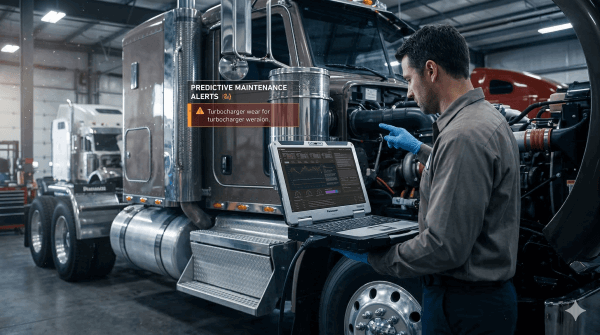
The future of fleet maintenance will be defined by enhancing data utilization, integrating more technology, and tools that minimize waste and maximize uptime. As fleets add EVs, ADAS, and telematics links, maintenance teams will rely on automation, AI, and predictive models to act early, prove compliance, and scale with less friction.
Predictive analytics uses sensor feeds and service logs to flag risk prior to a part failure. It predicts tire wear, brake life, battery health, and cooling problems, so crews schedule fixes in down times, not on the side of the road.
By mixing CAN bus data, vibration trends, fluid metrics, and historical work orders, models detect patterns that identify bearing fatigue or injector drift. This gets in front of layups and tow events by scheduling quick, low-cost fixes.
Data science tools reduce unplanned downtime and bring order to asset care. They can cluster assets by risk bands, configure dynamic service intervals, and trigger parts picks ahead of time. For instance, a city bus fleet can forecast HVAC failures ahead of a heat wave and stage parts.
Finance leaders get clearer forward views. These forecasts inform annual budgets, parts stocking plans, and staffing models, so cost spikes are less common and total cost of ownership remains in control.
AI service advisors now parse fault codes, cross-reference history, and recommend root cause and next steps. They suggest labor times, flag warranty routes, and assign work to the appropriate bay.
Dashboards convert raw data into action. They prioritize work by safety risk, cost impact, and legal requirement, assisting managers in deciding what to repair today as opposed to next week. Machine learning detects strange fuel burn, unexpected charge rate decreases on electric vehicles, or advanced driver-assistance system sensor drift, which tend to precede bigger breakdowns.
As fleets incorporate EVs and autonomy, AI shores up skill gaps and unifies calls across locations. It supports multi-jurisdiction rules, bringing soon-to-expire inspections and documents to the surface.
Telematics and cloud tools read vehicle health in real time across wide regions. Engines, transmissions, batteries and ADAS sensors report status, so teams verify faults without a manual inspection.
Remote alerts ignite repairs quickly. A truck with rising coolant temperature can now be routed 15 kilometers to a partner shop, parts pre-ordered, bay ready, and driver back on the road the same day.
Centralized command centers cater to big fleets and mixed powertrains. EV maintenance frequently runs 30 to 40 percent less than ICE but requires high-voltage education and new diagnostic equipment. Autonomous systems and ADAS introduce calibration steps and rigorous process control. The future of fleet maintenance involves preventive care, supported by real-time IoT data, which safeguards uptime, aids compliance across borders, and maintains asset value in an evolving industry.
Select fleet maintenance tracking goal. Start with what you must solve now: reduce breakdowns, keep vehicles safe, and give teams real-time data they trust. Then match features to needs, integration to your tech stack, and workflows to how your crews operate today. Explore 10+ things to compare—scalability, usability, alerts, dashboards, APIs, parts and work order tools, mobile access, analytics, EV support, and pricing. Even if two tools appear similar, dig into specific features, such as OEM service data, telematics partners, and custom rules for compliance. Smart fleet management enables a roaming team, so try how quickly it converts unfiltered data into actionable to-dos.
Select one that scales without a revamp. Search for multi-depot support, multi-language, and asset diversity. Light vans, heavy trucks, trailers, forklifts, and mixed OEMs should all be in one location.
Check for flexible data intake: telematics from major brands, fuel cards, GPS, and tire-pressure sensors. You’ll want APIs, webhooks, and bulk import to add ten or one thousand with the same ease.
Select Your Solution For instance, inquire regarding EV health metrics such as state of charge and battery cycles, predictive maintenance, role-based access for more users, and long-term data storage for audits. Price models should scale with per-asset tiers, add-on modules, and no hard caps.
Select innovative, cloud-first solution architecture with uptime SLAs, data residency choices, and 10,000+ asset performance. Don’t settle for tools that lag when dashboards load months of history.
Software should be fast to learn. Clean menus, simple labels, and no hidden preferences. New techs can book a PM in minutes, not hours.
Mobile is critical. Offline mode, barcode or QR scans for parts, photo upload and e-sign on work orders keep field teams moving. Drag-and-drop calendars, automatic reminders by odometer or hours, and one-click reports reduce admin time.
Conduct directed configuration for PM templates by asset category. Share simple, role-based dashboards: shop view, driver view, and manager KPIs.
Collect feedback from managers and drivers. Monitor adoption, eliminate friction, and optimize forms so data remains pure and valuable.
Seek a live onboarding, a named CSM, and 24/7 help in key channels. Robust docs, tutorials, and sandbox sites accelerate training without impeding work.
Anticipate frequent updates, security patches, and transparent release notes. Request integration playbooks and compliance guidance for inspections and records.
View your vendor as a partner enabling you to achieve goals like fewer roadside events per 100,000 kilometers, reduced costs per kilometer, and shorter repair cycle times.
For fleet maintenance, track work, parts and time with precision. Tie service plans to actual usage. Have a policy for alerts. Establish brief, consistent check intervals. Eliminate guesswork with clean data. Connect logs to fuel consumption, driver comments and service. Keep costs in sight with unit cost per kilometer and average time to repair. Small team? Begin with a light tool and a transparent PM list. For a big crew, connect CMMS, GPS and parts in a single view. Examples help: swap brake checks at 20,000 kilometers, flag cold start faults, rotate tires at set tread depth. What’s the next step on your calendar? Tell us your fleet size, your top three jobs and where you got your data.
Fleet maintenance tracking tracks vehicle health, service schedules, and repairs. It employs digital means to capture work, monitor expenses, and schedule preventative maintenance. This approach minimizes downtime, increases asset life, and enhances safety and compliance.
Simple logs overlook trends and actual expenses. Advanced tracking layers on alerts, analytics, and real-time data. This helps you anticipate failures, optimize service intervals, manage inventory, and reduce fuel and repair costs. You receive actionable insights, not just logs.
It automates scheduling, standardizes workflows, and centralizes data. Teams know what is what and when. Parts wait before service. Vehicles are off the road less. You save time, reduce mistakes, and keep assets productive and secure.
Unify telematics, fuel cards, parts inventory, procurement, and accounting. Bridge driver logs and work order tracking. Integration eliminates manual entry, enhances cost accuracy and allows you to trigger services based on actual asset utilization in real-time.
Telematics offers real-time odometer, fault codes, hours, and driver behavior. This information will initiate proactive servicing, alert critical problems, and enable condition-based maintenance. It minimizes surprise breakdowns and syncs maintenance to actual asset wear.
Anticipate AI-powered predictions, mobile-first workflows, remote diagnostics, and right-to-repair data access. EVs bring battery health and charging analytics on top. Standardized data and cybersecurity will become more important. It’s forward-looking attention and the least possible downtime.
Begin with your objectives, asset categories and team size. Focus on the user experience first, integrations second, mobile apps third and reporting fourth. Check support, security and overall cost. Request references and a trial. Pick a platform that is scalable with powerful analytics and automation.
Want to learn more about keeping your trucks and trailers road-ready? Browse additional resources from DMR Diesel on heavy-duty repairs, diagnostics, and fleet maintenance best practices.
Fleet Maintenance Service and Repair
Looking to expand your understanding of commercial vehicle safety and maintenance? Explore these trusted resources: